

Why a harness can alter how a dog moves
A harness is never just a simple accessory.
It moves with the dog in every direction: when accelerating, turning, jumping, stopping, or changing course. With every stride, it interacts with the shoulders, sternum, rib cage, and spine.
It is precisely for this reason that all harness models are not created equal.
At NINI, we chose to develop ours alongside an animal osteopath. Not simply as a marketing angle, but because it felt impossible to design equipment meant to be worn for hours each week without truly understanding how a dog's body functions.
Movement above all
Watching a dog run is fascinating.
The shoulders move forward freely, the shoulder blades glide smoothly beneath the skin, the spine follows every impulse, and the chest expands with every breath.
The slightest element placed in the wrong spot can restrict this natural mechanics.
An overly covering harness, a poorly positioned strap, or an ill-suited traction point can lead to compensatory movements that are not immediately noticeable. However, over time and through repetition, they can influence how the dog moves.
The purpose of a good harness is therefore not to restrain the dog.
It is to accompany them.
When the harness moves with the dog
One detail frequently comes up in the messages we receive.
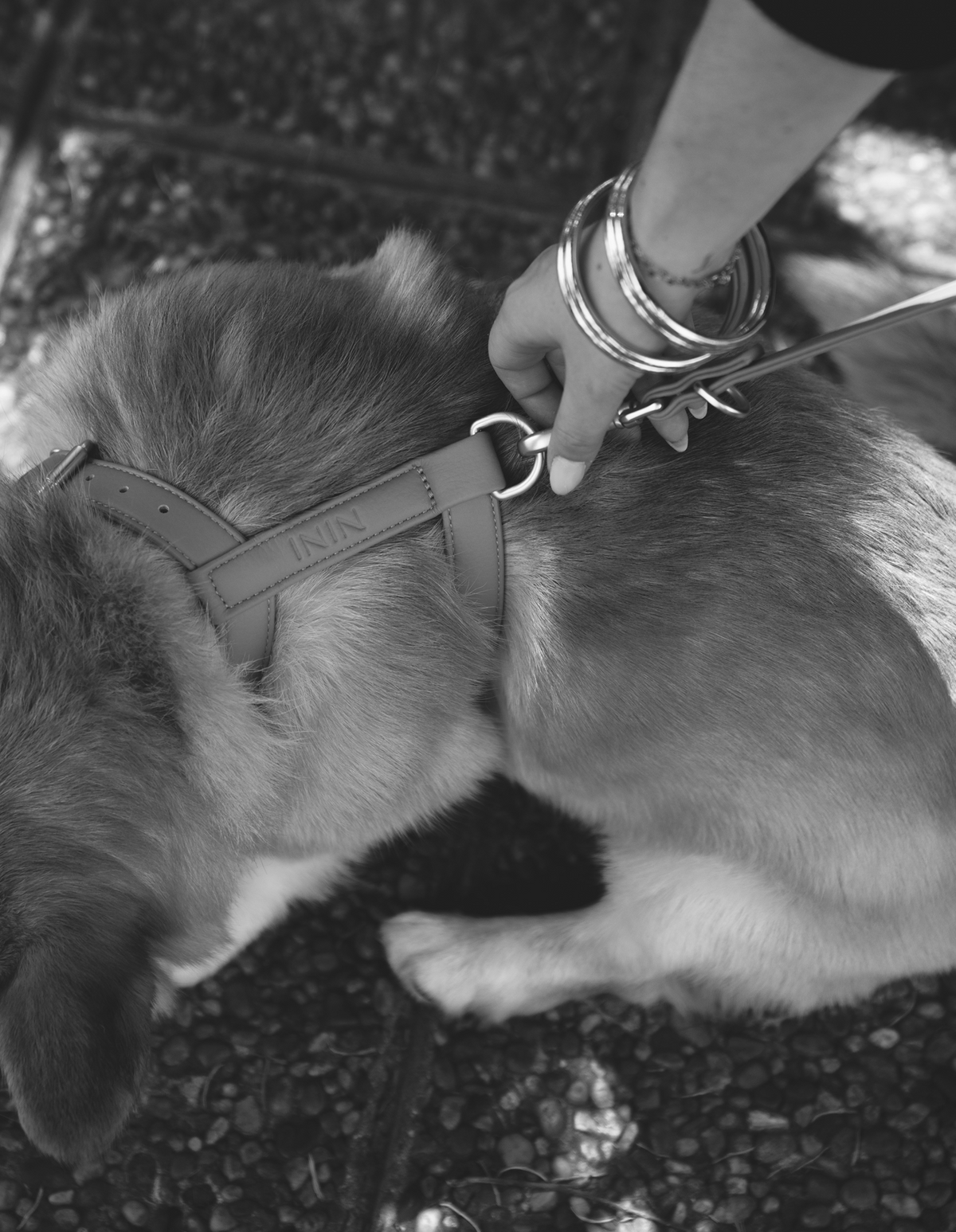
Some owners worry when they see the back strap shift slightly as their dog turns or plays.
In reality, this movement is intentional.
We designed this part so that it can accompany changes in direction. If the dog pivots suddenly or if the leash exerts lateral tension, the strap naturally follows its movement rather than creating a fixed pressure point at the neck or spine.
This is not a defect.
This is precisely what allows the harness to work with the dog's body rather than against it.
A matter of balance
Comfort does not depend solely on materials.
It also depends on proportions.
The width of the straps, their positioning, contact areas, and adjustment possibilities all play an essential role.
A harness that is too loose will twist on the body.
Conversely, a harness that is too tight will restrict the range of motion and can create unnecessary chafing.
The right adjustment is the one that allows the harness to remain stable while leaving the dog with complete freedom of movement.
Designing differently
When we began designing the first NINI prototypes, we spent months watching dogs walk, run, and play.
Every modification, sometimes by just a few millimeters, changed how the harness behaved.
We adjusted the widths, moved certain attachment points, refined the adjustments, and redesigned the pressure zones until we achieved a balance that respects the dog's natural biomechanics.
Because behind a product that seems simple lie dozens of invisible decisions.
The best harness is the one the dog forgets they are wearing.
A good harness is not the one you notice.
It is the one that disappears once worn.
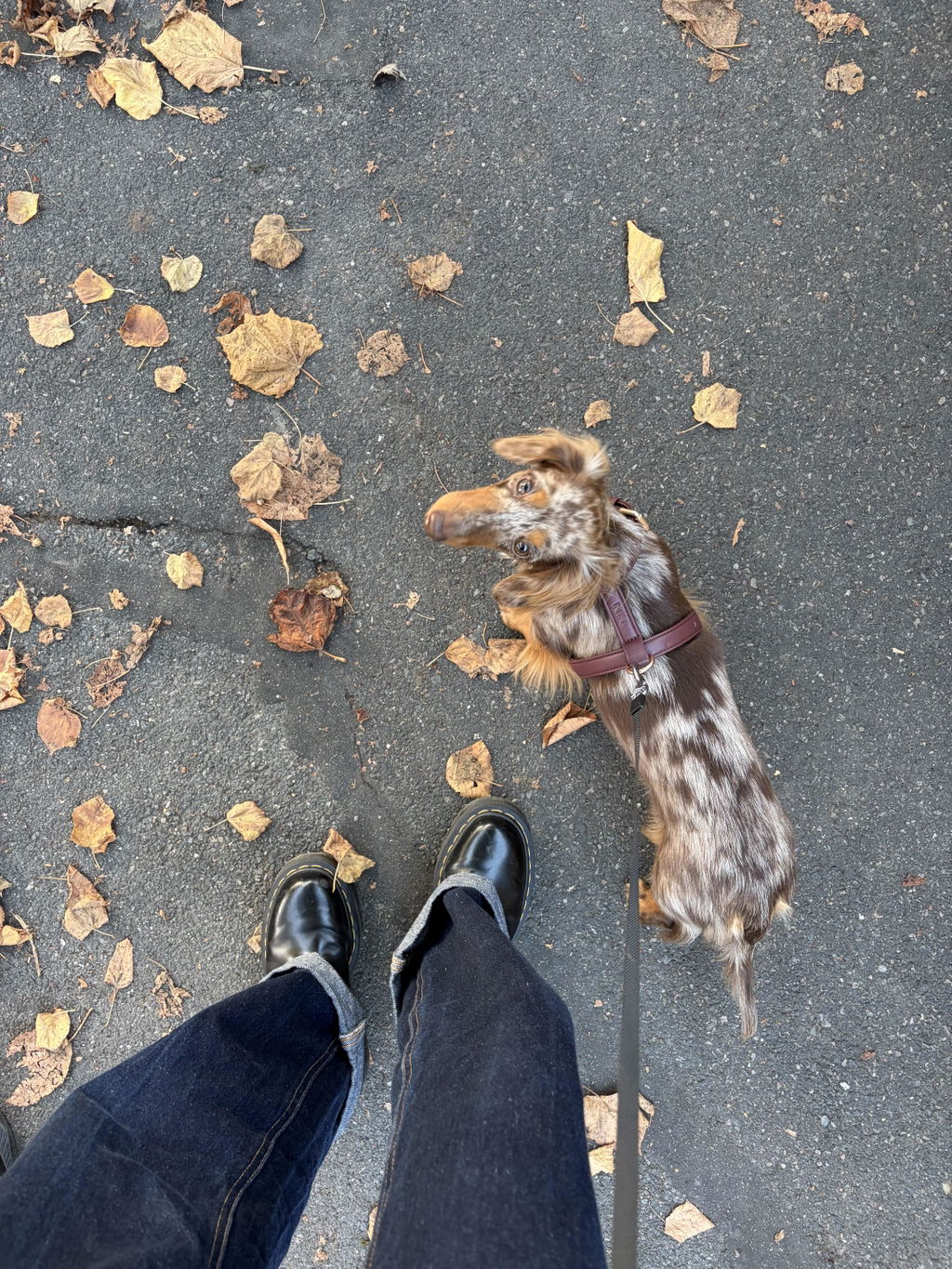
The one that accompanies daily walks without hindering a run, a jump, or a play session.
Because at heart, an accessory should never impose its presence.
It should simply allow a dog to be... a dog.